










The eNPS (Employee Net Promoter Score) is a straightforward yet powerful metric for assessing employee loyalty and satisfaction within an organization. This blog delves into the core question of eNPS, its significance in measuring employee engagement, and how to leverage additional survey questions to gain deeper insights into your workforce's sentiments.
eNPS stands for Employee Net Promoter Score, a metric that gauges employee loyalty and satisfaction within an organization.
It’s derived from the Net Promoter Score (NPS), which is widely used to measure customer loyalty but adapted for internal use to assess how likely employees are to recommend their workplace to others.
The primary goal of eNPS is to provide companies with a simple yet effective way to understand overall employee sentiment.
It offers a quick snapshot of the workforce’s morale, which can be an early indicator of potential issues like high turnover or disengagement.
Relation to Employee Engagement:
- Employee engagement is critical for productivity, retention, and overall company culture. A high eNPS typically correlates with engaged and satisfied employees who are likely to stay with the company longer and contribute more effectively.
- By regularly measuring eNPS, companies can track changes in employee sentiment over time and address issues before they escalate.
Why Run eNPS Surveys?
High eNPS scores are often linked to better business outcomes, such as improved employee retention, higher productivity, and stronger employer branding. Understanding the right questions to ask can help businesses leverage this metric to drive positive change.
Regularly assessing eNPS through carefully chosen questions enables continuous monitoring and improvement of employee engagement strategies.
The foundation of any eNPS survey is a single, straightforward question: “On a scale from 0 to 10, how likely are you to recommend this company as a place to work?”
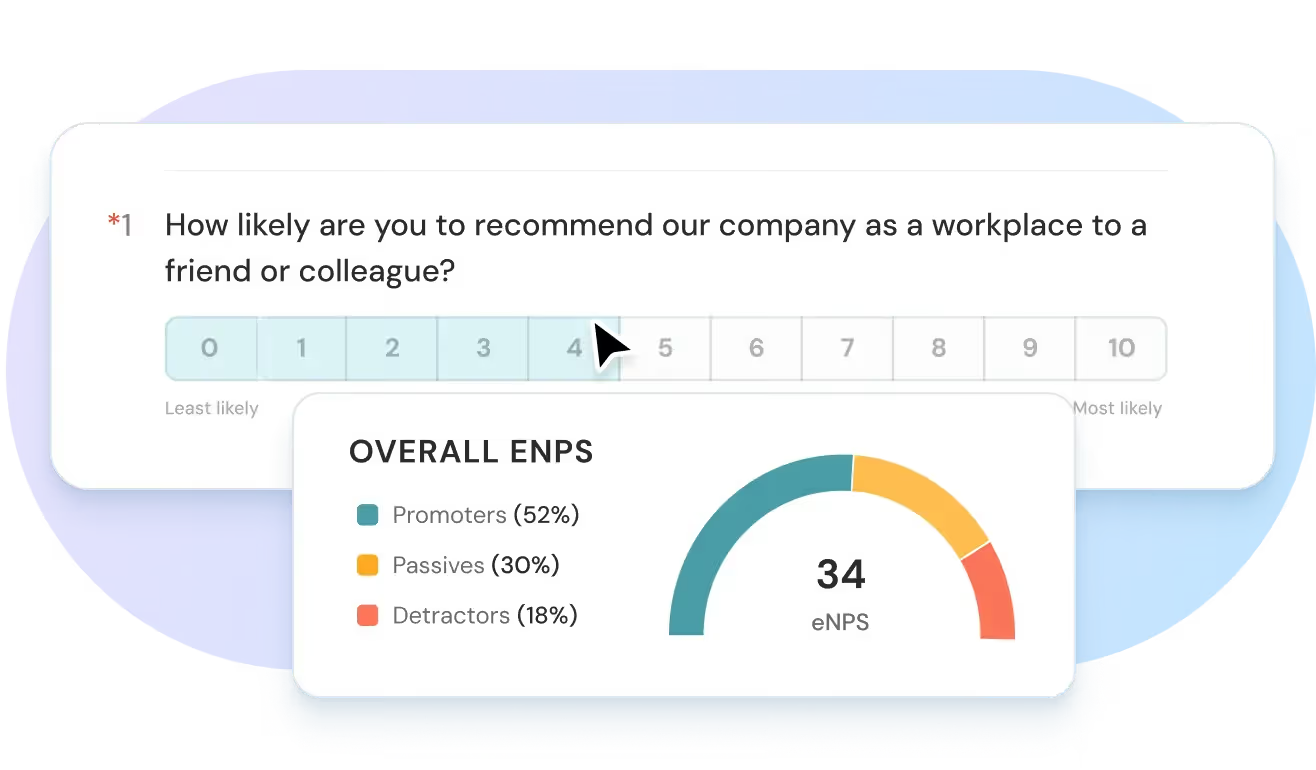
This question is intentionally broad and simple, making it easy for employees to respond quickly and honestly.
Why This Question Matters?
- Measures Employee Loyalty: This question directly reflects how employees feel about their workplace. A high score suggests strong loyalty and satisfaction, while a low score indicates dissatisfaction or disengagement.
- Applicability: The simplicity of the question makes it applicable across different industries, roles, and company sizes. It’s a universal metric that allows for easy benchmarking against other organizations.
- Predicts Future Behavior: Employees who are willing to recommend their company to others are more likely to stay longer, perform better, and contribute positively to the company culture.
Beyond the Core Question
While the core eNPS question is critical for gauging overall sentiment, it’s often not enough to fully understand the underlying reasons behind employees’ ratings.
Follow-up questions provide context and help identify specific areas of strength and areas that need improvement.
These questions can uncover deeper insights into employee experiences, offering actionable data to drive meaningful change. Follow-up questions can be both quantitative (e.g., rating scales) and qualitative (e.g., open-ended). A mix of both types ensures that you gather comprehensive feedback.
Essential eNPS Follow-Up Questions
"What’s the Primary Reason for Your Score?"
- This question directly addresses the "why" behind an employee’s rating.
- It helps identify specific factors influencing satisfaction or dissatisfaction, whether it’s management, work-life balance, company culture, or something else.
- By analyzing these responses, companies can pinpoint the root causes of any issues and take targeted action.
"What Changes Would You Like to See in the Company?"
- This question encourages employees to provide constructive feedback on areas where they see room for improvement.
- It’s a valuable way to gather suggestions from those on the ground, offering insights that management might not be aware of.
- Implementing feasible suggestions from this feedback can significantly improve employee satisfaction and engagement.
Category-Specific Questions
To dive deeper into specific aspects of the employee experience, you can categorize your eNPS survey questions into different focus areas:
1. Company Culture
Example Question: "How would you describe the company's culture?"
- This question helps gauge how employees perceive the work environment and whether they feel aligned with the company’s values and mission.
- A positive response here indicates a strong, supportive culture, while negative feedback might signal issues with inclusivity, communication, or team dynamics.
2. Leadership
Example Question: "Do you feel supported by the leadership team?"
- This question assesses employees’ views on management and leadership.
- Strong leadership support is often linked to higher employee satisfaction and better performance, while perceived lack of support can lead to disengagement.
3. Career Growth
Example Question: "Are there enough opportunities for career advancement?"
- This question explores whether employees feel they have a clear path for growth within the company.
- Career development is a key driver of employee retention, and identifying gaps in this area can help reduce turnover.
4. Work-Life Balance
Example Question: "How satisfied are you with your work-life balance?"
- This question addresses the critical issue of work-life balance, which can greatly affect overall job satisfaction.
- Understanding how employees feel about their work-life balance can inform policies and practices to support a healthier, more productive workforce.
5. Open-Ended Questions
Open-ended questions allow employees to express their thoughts and feelings in their own words, providing richer, more nuanced feedback than closed-ended questions.
They can reveal insights that might not surface in more structured questions, such as personal experiences, specific incidents, or innovative ideas.
Examples of Effective Open-Ended Questions
"What do you enjoy most about working here?"
Helps identify the strengths and positive aspects of the company from the employee’s perspective.
"What could we do to improve your work experience?"
Directly invites suggestions for improvement, providing actionable ideas for enhancing employee satisfaction and engagement.
"Is there anything else you’d like to share about your experience at the company?"
A catch-all question that gives employees the opportunity to bring up any issues or thoughts that weren’t covered in the survey.
1. First Calculate the eNPS score
The eNPS score is calculated by subtracting the percentage of Detractors from the percentage of Promoters.
eNPS = % of Promoters - % of Detractors
This score can range from -100 (if every employee is a Detractor) to +100 (if every employee is a Promoter).
A positive eNPS indicates that a company has more Promoters than Detractors, which is generally a good sign of employee satisfaction. A negative eNPS suggests that there are more Detractors than Promoters, indicating potential issues that need to be addressed.

Promoters (Scores 9-10):
- Employees who score 9 or 10 are considered “Promoters.” They are highly satisfied, engaged, and loyal. They are likely to speak positively about the company and contribute to a positive work environment.
- These employees are also more likely to stay with the company long-term and recommend it to potential hires.
Passives (Scores 7-8):
- Employees who score 7 or 8 are classified as “Passives.” They are generally satisfied but not overly enthusiastic. They may not actively promote the company but aren’t likely to speak negatively about it either.
- Passives are at a higher risk of disengagement if their concerns are not addressed, and they may be more open to opportunities outside the company.
Detractors (Scores 0-6):
- Employees who score between 0 and 6 are labeled as “Detractors.” They are unhappy or dissatisfied with their work experience and may actively speak negatively about the company.
- Detractors are more likely to leave the company and can have a negative impact on team morale and overall company culture if their issues are not addressed.
2. Understand the Implications
A high eNPS score is an indicator of a healthy workplace with engaged and satisfied employees. Companies with high scores often enjoy better retention rates, higher productivity, and a strong employer brand.
A low or negative eNPS score is a red flag that warrants further investigation. It suggests underlying issues that may be affecting employee morale and engagement, such as poor management, lack of career growth opportunities, or a toxic work environment.
Using eNPS Data for Actionable Insights
The value of eNPS lies not just in the score itself but in the insights it provides. By analyzing the distribution of scores and accompanying feedback, companies can identify specific areas for improvement.
For instance, if a significant number of employees are Detractors, it’s essential to delve deeper into their concerns through follow-up surveys or focus groups. Addressing these issues can lead to improved employee satisfaction and a higher eNPS over time.
3. Identifying Key Insights from Responses
Segment the Data
- Break down the eNPS data by different segments, such as department, tenure, location, or role. This helps to identify specific areas where the company is performing well and where there might be issues.
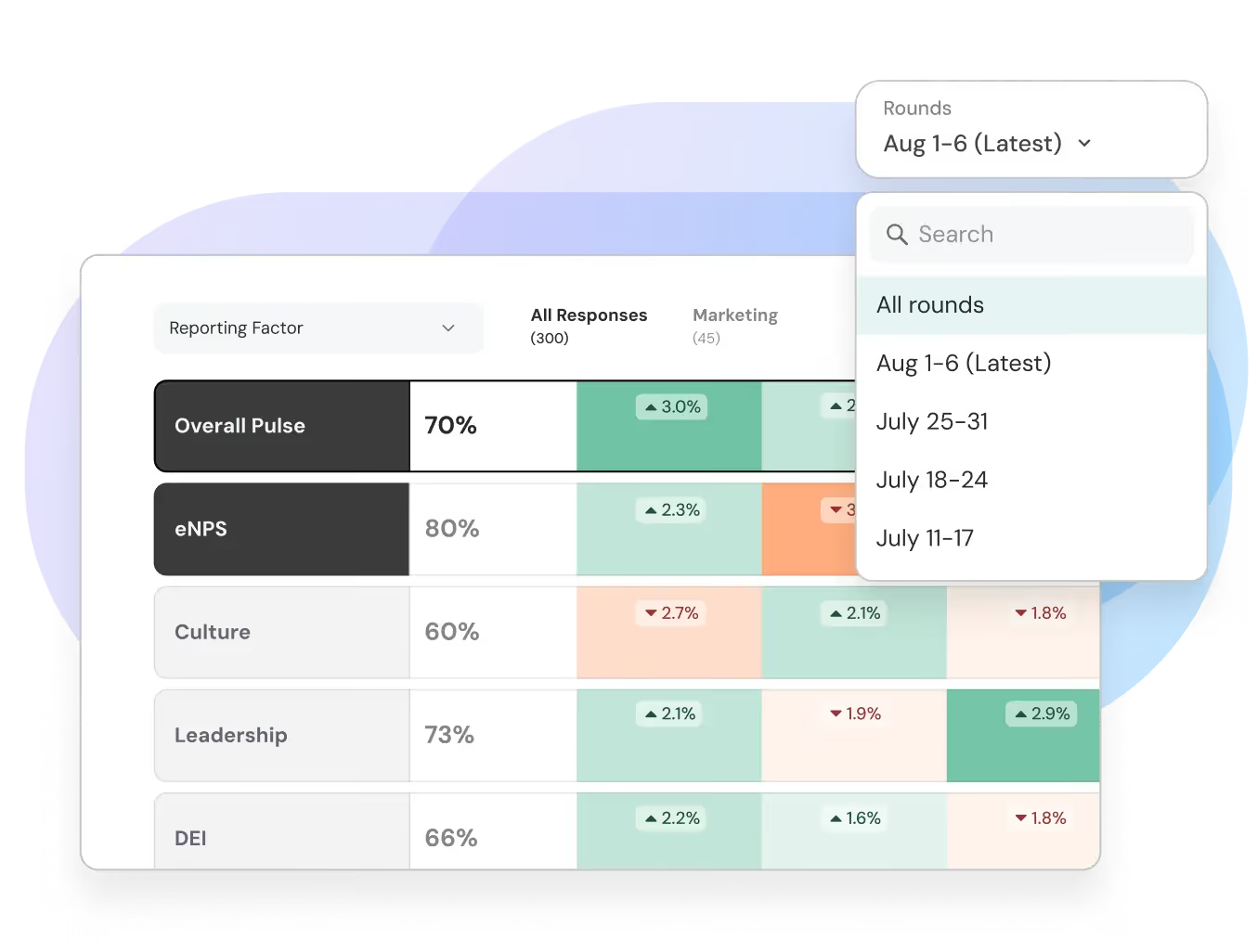
- For example, a department with a low eNPS score might indicate problems with management, workload, or team dynamics that need addressing.
Analyze Open-Ended Responses
- Qualitative feedback from open-ended questions is a goldmine of insights. Use text analysis tools or manual coding to identify common themes, sentiments, and specific issues raised by employees.

- Look for patterns in the feedback that can explain the overall eNPS score, such as frequent mentions of leadership issues, work-life balance concerns, or praise for company culture.

Spot Trends Over Time
- Compare eNPS scores and feedback from different survey periods to identify trends. Are scores improving, declining, or remaining stable? What changes or initiatives might have influenced these trends?
- Understanding trends helps in evaluating the effectiveness of past actions and planning future strategies.
Benchmark Your eNPS Scores
- Compare your eNPS with industry benchmarks to understand where your company stands relative to competitors. This can provide context for your score and highlight areas where you might need to focus improvement efforts.
Psst.. You can do all this with ThriveSparrow. Consider signing up for a free trial. Run an eNPS survey for free today.

Still not convinced?
Get a free sample of an eNPS survey report, and see how you can leverage those insights to better retain your employees.

.svg)
Final Thoughts
The eNPS survey is a powerful tool for gauging employee loyalty and satisfaction. Unlike more comprehensive engagement surveys, eNPS provides a quick, actionable snapshot of employee sentiment, making it an essential component of any employee engagement strategy.
By focusing on a single, straightforward question, eNPS allows organizations to quickly identify Promoters, Passives, and Detractors, providing a clear indicator of overall employee sentiment.